
Mission to Mongo
Overview:
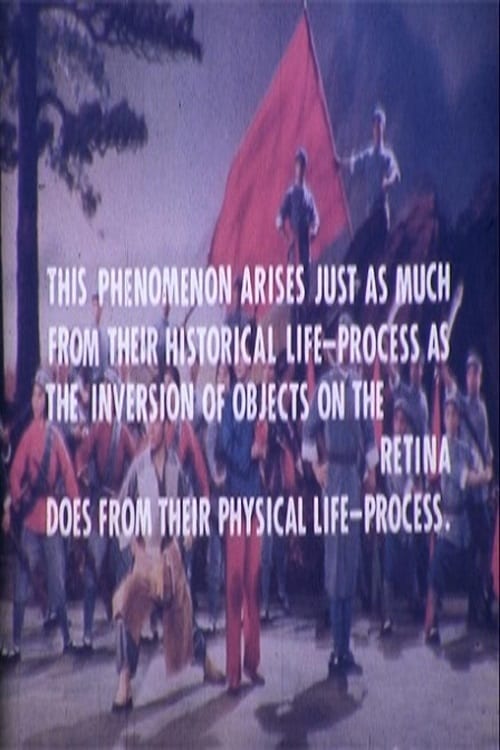
First, I wanted to make a kind of reflexively impoverished Busby Berkeley extravaganza. Second, I was interested in juxtaposing two cultural artifacts–which could be schematized as East/West, socialism/capitalism, propaganda/entertainment, as well as image/sound–and see how they reverberated. In other words, I wanted to make an essay out of things, as well as a communist musical. But the question arose–what was the ideology of such film play? Is MISSION TO MONGO aestheticized politics or political art? –J. H.
Recommendations for you

Vampir Cuadecuc
An atmospheric essay, which is an alternative version of Count Dracula, a film directed by Jess Franco in 1970; a ghostly narration between fiction and reality.

Jodorowsky's Dune
In 1974, Chilean-French director Alejandro Jodorowsky embarked on the quixotic project of adapting Frank Herbert's influential novel Dune (1969) for the big screen. After investing two years, and millions of dollars, the gigantic project ended in failure; but the artists Jodorowsky brought together to carry it out continued to work together, and ended up laying the foundations for modern science fiction cinema.

Room 237
A subjective documentary that explores various theories about hidden meanings in Stanley Kubrick's classic film The Shining. Five very different points of view are illuminated through voice over, film clips, animation and dramatic reenactments.

Stop Making Sense
A concert film documenting Talking Heads at the height of their popularity, on tour for their 1983 album "Speaking in Tongues." The band takes the stage one by one and is joined by a cadre of guest musicians for a career-spanning and cinematic performance that features creative choreography and visuals.

The Pervert's Guide to Ideology
A journey into the labyrinthine heart of ideology, which shapes and justifies both collective and personal beliefs and practices: with an infectious zeal and voracious appetite for popular culture, Slovenian philosopher and psychoanalyst Slavoj Žižek analyzes several of the most important films in the history of cinema to explain how cinematic narrative helps to reinforce prevailing ethics and political ideas.

The Pervert's Guide to Cinema
A hilarious introduction, using as examples some of the best films ever made, to some of Slovenian philosopher and psychoanalyst Slavoj Žižek's most exciting ideas on personal subjectivity, fantasy and reality, desire and sexuality.

The Decline of Western Civilization Part II: The Metal Years
An exploration of the heavy metal scene in Los Angeles, with particular emphasis on glam metal. It features concert footage and interviews of legendary heavy metal and hard rock bands and artists such as Aerosmith, Alice Cooper, Kiss, Megadeth, Motörhead, Ozzy Osbourne and W.A.S.P..

Voyage of Time: The IMAX Experience
A celebration of the universe, displaying the whole of time, from its start to its final collapse. This film examines all that occurred to prepare the world that stands before us now: science and spirit, birth and death, the grand cosmos and the minute life systems of our planet.

Stardust Memories
While attending a retrospect of his work, a filmmaker recalls his life and his loves: the inspirations for his films.

Koyaanisqatsi
Takes us to locations all around the US and shows us the heavy toll that modern technology is having on humans and the earth. The visual tone poem contains neither dialogue nor a vocalized narration: its tone is set by the juxtaposition of images and the exceptional music by Philip Glass.

The God Committee
Medicine, money and morality clash when a hospital's Heart Transplant Selection Committee has only minutes to decide which of three patients on the transplant list will receive a heart that has suddenly become available.

Totally F***ed Up
Gay, alienated Los Angeles teens have a hard time as their parents kick them out of their homes, they don’t have money, their lovers cheat, and they are harassed by gay-bashers.

Industrial Symphony No. 1: The Dream of the Brokenhearted
After her boyfriend ends their relationship, the dreamself of a heartbroken woman floats through the air over an industrial wasteland singing ballads of love.

Unthinkable
The government gets wind of a plot to destroy America involving a trio of nuclear weapons for which the whereabouts are unknown. It's up to a seasoned interrogator and an FBI agent to find out exactly where the nukes are.

Side by Side
Since the invention of cinema, the standard format for recording moving images has been film. Over the past two decades, a new form of digital filmmaking has emerged, creating a groundbreaking evolution in the medium. Keanu Reeves explores the development of cinema and the impact of digital filmmaking via in-depth interviews with Hollywood masters, such as James Cameron, David Fincher, David Lynch, Christopher Nolan, Martin Scorsese, George Lucas, Steven Soderbergh, and many more.

The 4:30 Movie
In the summer of 1986, three sixteen year old friends spend their Saturdays sneaking into movies at the local multiplex. But when one of the guys also invites the girl of his dreams to see the latest comedy, each of the teens learn more about life and love.

The Shift
Following a tense encounter with a mysterious stranger with otherworldly powers, a man finds himself banished to a parallel, tyrannical Earth, where he fights to get back to the woman he loves.

They Live
A lone drifter stumbles upon a unique pair of sunglasses that reveal aliens are systematically gaining control of the Earth by masquerading as humans and lulling the public into submission.

Avatar: Creating the World of Pandora
The Making-of James Cameron's Avatar. It shows interesting parts of the work on the set.

As I Was Moving Ahead Occasionally I Saw Brief Glimpses of Beauty
A compilation of over 30 years of private home movie footage shot by Lithuanian-American avant-garde director Jonas Mekas, assembled by Mekas "purely by chance", without concern for chronological order.