
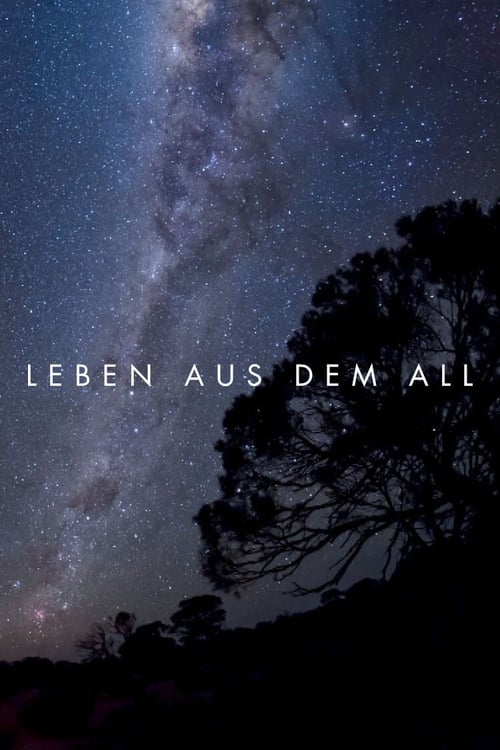
Life from Space
Overview:
In this two-part series, we take a look at the monumental discoveries underway, specifically surrounding black holes and meteorites. Black holes have been revealed as one of the foundations for the basic conditions of life. Through black holes, life is possible in an infinite number of places in space. We also follow how meteorites brought the basic substances of life to our planet, allowing for its creation. The films describe the latest findings concerning cosmic events in relation to the origin of life, providing a grandiose perspective of what makes life possible.
Recommendations for you

Alien Worlds
Applying the laws of life on Earth to the rest of the galaxy, this series blends science fact and fiction to imagine alien life on other planets.

How the Universe Works
A users' guide to the cosmos, from the Big Bang to galaxies, stars, planets and moons: where did it all come from and how does it all fit together? A primer for anyone who has ever looked up at the night sky and wondered.

Our Universe
Witness the remarkable story of our universe over billions of years and its inextricable link to life on Earth in this sweeping documentary series.

History's Greatest Mysteries
Investigates a wide range of historically compelling topics and the mysteries surrounding each including the Titanic, D.B. Cooper, Roswell, John Wilkes Booth, and more. Fresh, new evidence and perspectives will be showcased, such as never-before-released documents, personal diaries and DNA evidence.

Life on Earth
The story of life, from the first primitive cells to the plants and animals that now live around us.

Cosmos
Famed astrophysicist Neil deGrasse Tyson provides clarity for the vision of the cosmos as he voyages across the universe with never-before-told stories that delve into the scientific concepts of the laws of gravity and the origins of space and time.

Planet Earth II
David Attenborough presents a documentary series exploring how animals meet the challenges of surviving in the most iconic habitats on earth.

Prehistoric Planet
Experience the wonders of our world like never before in this epic series from Jon Favreau and the producers of Planet Earth. Travel back 66 million years to when majestic dinosaurs and extraordinary creatures roamed the lands, seas, and skies.

A Real Bug's Life
Enter an unseen micro-verse where miniature heroes use amazing superpowers to survive in a series of spellbinding dramas.

Human Planet
A cinematic experience bringing you the most amazing human stories in the world. Humans and wildlife surviving in the most extreme environments on Earth.

Through the Wormhole
Hosted by Morgan Freeman, Through the Wormhole explores the deepest mysteries of existence - the questions that have puzzled mankind for eternity. What are we made of? What was there before the beginning? Are we really alone? Is there a creator? These questions have been pondered by the most exquisite minds of the human race. Now, science has evolved to the point where hard facts and evidence may be able to provide us with answers instead of philosophical theories. Through the Wormhole brings together the brightest minds and best ideas from the very edges of science - Astrophysics, Astrobiology, Quantum Mechanics, String Theory, and more - to reveal the extraordinary truth of our Universe.

Earth at Night in Colour
Filmed across six continents, this docuseries uses cutting-edge camera technology to capture animals' nocturnal lives, revealing new behaviours filmed in full color like never before.

Nature
Consistently stunning documentaries transport viewers to far-flung locations ranging from the torrid African plains to the chilly splendours of icy Antarctica. The show's primary focus is on animals and ecosystems around the world. A comic book based on the show, meant to be used an as educational tool for kids, was briefly distributed to museums and schools at no cost in the mid-2000s.

Our Living World
This stunning nature series narrated by Cate Blanchett explores the intelligence, resourcefulness and interconnectedness of life on our planet.

Horizon
Horizon tells amazing science stories, unravels mysteries and reveals worlds you've never seen before.

Great Migrations
Shot from land and air, in trees and cliff-blinds, on ice floes and underwater, this documentary tells the powerful stories of many of the planet's species and their movements, while revealing new scientific insights with breathtaking high-definition clarity and emotional impact. The beauty of these stories is underscored by a new focus into these species; fragile existence and their life-and-death quest for survival in an ever-changing world.

Life on Our Planet
Life's extraordinary journey to conquer, adapt and survive on Earth across billions of years comes alive in this groundbreaking nature docuseries.

Life
David Attenborough looks at the extraordinary ends to which animals and plants go in order to survive. Featuring epic spectacles, amazing TV firsts and examples of new wildlife behaviour.

Tiny World
This docuseries showcases nature's lesser-known tiny heroes. Spotlighting small creatures and the extraordinary things they do to survive, each episode is filled with surprising stories and spectacular cinematography.

Natural World
Natural World is a nature documentary television series broadcast annually on BBC Two and regarded by the BBC as its flagship natural history brand. It is currently the longest-running series in its genre on British television, with more than 400 episodes broadcast since its inception in 1983. Natural World is produced by the BBC Natural History Unit in Bristol, but individual programmes can be in-house productions, collaborative productions with other broadcasters or films made and distributed by independent production companies and purchased by the BBC. Natural World programmes are often broadcast as PBS Nature episodes in the USA. Since 2008, most Natural World programmes have been shot and broadcast in high definition.